Luminesca has been quite well received on Greenlight Concepts. Here's hoping it would be the same on Greenlight Games!
Monday, 29 October 2012
Monday, 22 October 2012
Steam Greenlight Concepts
Guess who's on Steam Greenlight Concepts...
For those who are unfamiliar: Greenlight is a community-driven feature of the megalithic digital distribution platform Steam which allows players to vote for which indie games they want to get published there next. The Concepts section is for projects which are early in development or simply just idea pitches.
I figured it would be a good idea to try to get some more exposure for Luminesca and gain some useful feedback from a larger audience.
If you have a Steam account you can help out by voting for Luminesca, engaging in discussion or adding it to your Greenlight Favourites!
UPDATE: It's now on 'proper' Greenlight, here!
Friday, 19 October 2012
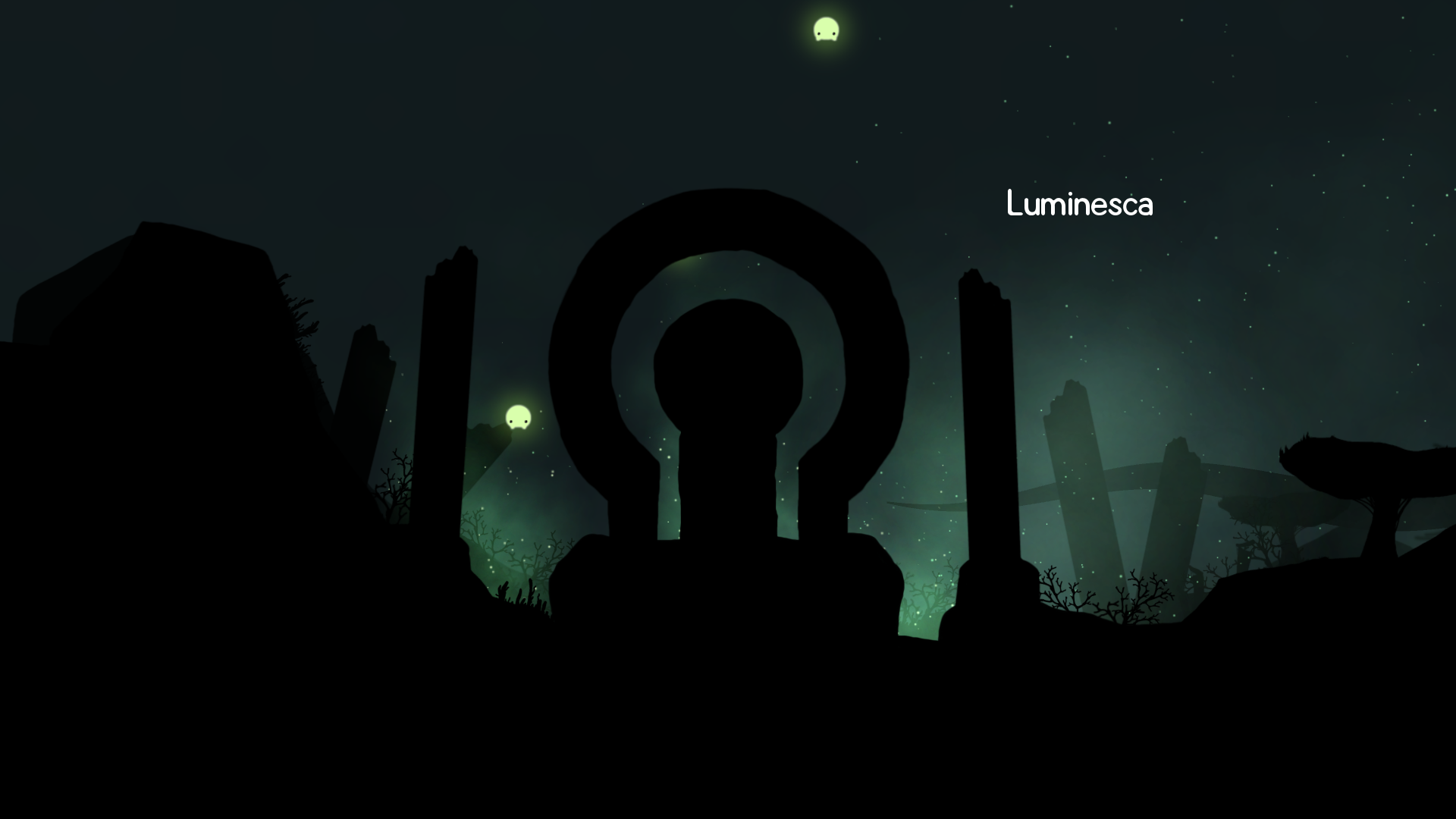
Video & Wallpaper - New Title Screen
Here's a video of the new animated title screen, and a hi-resolution wallpaper too! It's still a work in progress, of course, but I think it demonstrates some of the progress I've been making quite nicely!
Wednesday, 17 October 2012
Carving Seascapes
This post is an overview of my process for building environments for Luminesca, intended to be a look into my development process and potentially a useful guide for people wanting to make something similar. This process won't be right for everyone; we've all got our own little quirks and techniques that we feel comfortable using, but will hopefully provide some interesting insight!
As you may already know, I am building Luminesca in Unity which has a simple, fast pipeline and supports some useful plugins, namely Polygon Tool and 2D Toolkit (among others).
1. Layering Up
A key thing to be aware of is that Luminesca's environments are built in 2D layers, set apart at fixed distances on the Z axis to give them depth. I always use a Z depth value of zero for the gameplay layer, where all the action takes place. This just makes it easier to remember and helps working out whether everything is aligned correctly. I use a Perspective camera (as opposed to Orthographic) with a very low field of view so I can get some nice parallax effects on the background layers.
As you may already know, I am building Luminesca in Unity which has a simple, fast pipeline and supports some useful plugins, namely Polygon Tool and 2D Toolkit (among others).
1. Layering Up
A key thing to be aware of is that Luminesca's environments are built in 2D layers, set apart at fixed distances on the Z axis to give them depth. I always use a Z depth value of zero for the gameplay layer, where all the action takes place. This just makes it easier to remember and helps working out whether everything is aligned correctly. I use a Perspective camera (as opposed to Orthographic) with a very low field of view so I can get some nice parallax effects on the background layers.
Click to enlarge
I use empty game objects as 'managers' for each layer so I can find them easily. All of that layers components (like meshes and sprites) are children of these manager objects, and are all assigned to a visibility layer in Unity so I can hide and show them when necessary.
Wednesday, 10 October 2012
Reboot Progress
I've had some free time to work on Luminesca recently. There have been some interesting developments and I'm feeling happy with the new direction so I thought it would be an appropriate time to talk about the game again.
As I mentioned in my last update, I've gone back to the drawing board with the overarching game design and structure and I'm now taking a less challenge-focused approach to gameplay, with a stronger emphasis on exploration and atmosphere. That means fewer reflex-based scenarios and far less penalty for failure (if any). It was a tough decision to make. I'm a big proponent for elegant systemic game design, but I was starting to feel like I was bashing my head against a brick wall in some ways. I was trying to shoehorn in mechanics and challenges where they didn't fit and were not appropriate. Simplifying the game has made it feel a lot closer to my early conceptualisations and I'm feeling confident about pursuing this style.
Another significant change to my plans is the shift to an episodic format, which has helped a great deal in breaking the project down into manageable chunks. I'm really keen to get something playable out there as soon as possible. I'll be revealing more details about the release schedule in the near future as well as new images and videos.
Be sure to follow the game on Twitter, Facebook or the new Tumblr to stay updated, and please help to spread the word! Until then, enjoy these new screenshots of Episode 1.
As I mentioned in my last update, I've gone back to the drawing board with the overarching game design and structure and I'm now taking a less challenge-focused approach to gameplay, with a stronger emphasis on exploration and atmosphere. That means fewer reflex-based scenarios and far less penalty for failure (if any). It was a tough decision to make. I'm a big proponent for elegant systemic game design, but I was starting to feel like I was bashing my head against a brick wall in some ways. I was trying to shoehorn in mechanics and challenges where they didn't fit and were not appropriate. Simplifying the game has made it feel a lot closer to my early conceptualisations and I'm feeling confident about pursuing this style.
Another significant change to my plans is the shift to an episodic format, which has helped a great deal in breaking the project down into manageable chunks. I'm really keen to get something playable out there as soon as possible. I'll be revealing more details about the release schedule in the near future as well as new images and videos.
Be sure to follow the game on Twitter, Facebook or the new Tumblr to stay updated, and please help to spread the word! Until then, enjoy these new screenshots of Episode 1.
Sunday, 1 April 2012
An Open and Honest Update
It's about time I explained the current state of Luminesca. The project has now been running for over a year and, for better or worse, where I am now is nowhere near where I planned to be by this time. Focuses have shifted, certain constraints have arisen while others have relaxed, and my general outlook on the project has changed.
In this post I'm going to highlight changes to some of my former intentions and explain how they came about.
Full-time development
By far the most significant change to the development is the amount of time I am dedicating to it on a weekly basis. The key purpose for the IndieGoGo campaign was to raise enough funds that I could take some time out from work and dedicate all my time to Luminesca. I raised a notable amount from the campaign for which I am hugely grateful, but the high cost of living meant that this money pretty much only covered the time I spent promoting it. Perhaps this was a lack of foresight on my part, perhaps I should have been more prepared and financially stable before starting the campaign. This is something I actually deeply regret because I have been unable to fulfil my plans as quickly as I had hoped.
What this meant was I had to go back to full-time work and shift Luminesca's development into my free time. This has significantly slowed down development, I can't deny that. On the other hand I have picked a lot of very valuable skills in my new job which I can apply to Luminesca, and it will be a much better game for it.
Project scope
I had high hopes for the game in its early days, and a lot of this was probably due to over-ambition and naivety. Luminesca was planned to be a 4-6 hour game with 3D graphics, hopefully delivered to a variety of platforms such as Xbox Live Arcade and iOS. Since then I've come to realise what a massive amount of work this entails and have re-scoped the project accordingly. If I stuck to the original plan I think the game would simply never see the light of day, or at least not for a very long time. I don't want it to take that long, I don't want to get to the point where I'm sick of it, and I don't want to keep the IndieGoGo funders waiting.
I'm now looking at a much more focused design, closer to 1-2 hours in length, using 2D art which is much quicker and easier to produce in the quantities I need, and I'm aiming to develop only for PC/Mac/Linux at this stage. If the game is successful I will consider other platforms, but it would take too much time and effort to work them into the plan at this stage.
What comes next?
All I ask of you now is patience. It will be worth it!
In this post I'm going to highlight changes to some of my former intentions and explain how they came about.
Full-time development
By far the most significant change to the development is the amount of time I am dedicating to it on a weekly basis. The key purpose for the IndieGoGo campaign was to raise enough funds that I could take some time out from work and dedicate all my time to Luminesca. I raised a notable amount from the campaign for which I am hugely grateful, but the high cost of living meant that this money pretty much only covered the time I spent promoting it. Perhaps this was a lack of foresight on my part, perhaps I should have been more prepared and financially stable before starting the campaign. This is something I actually deeply regret because I have been unable to fulfil my plans as quickly as I had hoped.
What this meant was I had to go back to full-time work and shift Luminesca's development into my free time. This has significantly slowed down development, I can't deny that. On the other hand I have picked a lot of very valuable skills in my new job which I can apply to Luminesca, and it will be a much better game for it.
Project scope
I had high hopes for the game in its early days, and a lot of this was probably due to over-ambition and naivety. Luminesca was planned to be a 4-6 hour game with 3D graphics, hopefully delivered to a variety of platforms such as Xbox Live Arcade and iOS. Since then I've come to realise what a massive amount of work this entails and have re-scoped the project accordingly. If I stuck to the original plan I think the game would simply never see the light of day, or at least not for a very long time. I don't want it to take that long, I don't want to get to the point where I'm sick of it, and I don't want to keep the IndieGoGo funders waiting.
I'm now looking at a much more focused design, closer to 1-2 hours in length, using 2D art which is much quicker and easier to produce in the quantities I need, and I'm aiming to develop only for PC/Mac/Linux at this stage. If the game is successful I will consider other platforms, but it would take too much time and effort to work them into the plan at this stage.
What comes next?
- I will continue to develop Luminesca in my spare time.
- I recently cleaned out the Unity project folder as it was getting bloated with obsolete code and art assets. It was becoming too big for what it needed to be. This reboot has given me a jolt of enthusiasm and made the whole thing far easier to manage.
- Some of the IndieGoGo funds have gone into purchasing Unity extensions - namely 2D Toolkit and uScript - which speed up my workflow immensely, so this is getting faster and more productive.
- I now have a much clearer idea about how the full game will take shape and I'm working on a demo of the opening sections using my new 2D art style. As soon as this is ready I will make it available to everyone who donated. I really can't wait to show off all the ideas I've come up with in the last few months!
- To all the people who donated: I have not forgotten about you! I will continue to work towards making the game the best it can be and making your donation worthwhile.
All I ask of you now is patience. It will be worth it!
Saturday, 31 December 2011
2D Lighting System
Today I got a new 2D lighting system working. The old system was simply a big black square with a hole in the middle. The drawback of that system was that it only supported one light at a time, but the new one allows an unlimited number.
Please note that in this video the glow from Lum's esca does not grow when you collect planktids. This will change!
For those interested in the technique I used: it's really simple! I just attached a flat plane to each light source with a glowing sprite material. The material uses a Particles/Additive shader. Behind all this is another large plane with a semi-transparent black texture applied which darkens the background. The foreground rocks and creatures and all rendered in front of the glows so they are not obscured.
Happy New Year!
Subscribe to:
Comments (Atom)